If you have recently bought an electric vehicle — or you are thinking about making the switch — one of the first questions you will likely ask is how to get a charger fitted at home. A home EV charger makes day-to-day charging far more convenient than relying on public points, but a common question is whether you need a qualified electrician to install it, or whether it is something you can arrange yourself.
The short answer is yes — you do need a qualified electrician to install an EV charger at home. Here is what that means in practice, what it costs, and what to expect from the process.
Do You Need an Electrician to Install an EV Charger?
Yes. Home EV charger installation must be carried out by a qualified electrician, and in most cases by one who is registered with an approved scheme such as OZEV (the Office for Zero Emission Vehicles). This is a legal requirement tied to building regulations, not just best practice.
Installing a home charger involves running a dedicated circuit from your consumer unit to the charger unit — typically on an external wall of your property. This is notifiable electrical work under Part P of the Building Regulations, which means it must be carried out by a competent person who can self-certify the work, or it must be notified to your local building control authority.
Why EV Charger Installation Is Not a DIY Job
Beyond the legal requirements, there are practical safety reasons why this work should only be handled by a qualified electrician.
A home EV charger typically draws 7.4 kW (32A) — significantly more than most household appliances. That level of sustained load requires correctly sized cabling, appropriate circuit protection, and a consumer unit that can safely accommodate the additional demand. An incorrectly installed charger creates a genuine fire and electrocution risk.
There is also the question of your home insurance. If a charger is installed without the correct certification and causes damage or a fire, your insurer may refuse a claim on the grounds that the installation did not comply with building regulations. The cost of getting this done correctly is very small compared to that risk.
What Is the OZEV Grant, and Does It Apply to You?
The UK government has historically offered grants to help offset the cost of home EV charger installation. Currently, the EV Chargepoint Grant provides eligible homeowners with a discount of up to £350 towards the cost of a charger and its installation.
To be eligible, you must:
- Own or have off-street parking at the property
- Own or be the primary user of an eligible electric or plug-in hybrid vehicle
- Use an OZEV-registered installer
The last point is important: only chargers installed by an OZEV-registered installer qualify for the grant. If you use an unregistered installer, you will not be able to claim.
Eligibility criteria can change, so it is always worth checking the current GOV.UK guidance before you book. An OZEV-registered electrician will be able to confirm your eligibility and handle the application process as part of the installation.
How Much Does It Cost to Have an EV Charger Installed?
The cost of a home EV charger installation in the UK typically ranges from £700 to £1,200, depending on the charger unit you choose, the complexity of the installation, and any additional electrical work required.
Here is a rough cost breakdown:
| Element | Typical Cost |
|---|---|
| 7kW home charger unit | £300 – £700 |
| Installation labour | £200 – £500 |
| Consumer unit work (if needed) | £150 – £400 additional |
| OZEV grant (if eligible) | −£350 |
If your property has an older consumer unit or the existing supply is not sufficient to support the additional load, some preparatory electrical work may be needed before the charger can be installed. An OZEV-registered electrician will assess this as part of the survey.
For context on what electrical labour typically costs, see our guide on how much does an electrician charge per hour.
What Happens During a Home EV Charger Installation?
A typical home EV charger installation takes between 2 and 4 hours for a straightforward job. Here is what to expect:
Survey or site assessment (sometimes done in advance):
The electrician checks your consumer unit, assesses available capacity, and confirms the best route for cabling from the consumer unit to the charger location.
Cabling:
A dedicated circuit is run from the consumer unit to the point where the charger will be mounted. For most homes, this involves running cable internally (through the loft or under floorboards) and then externally to the mounting point.
Charger installation:
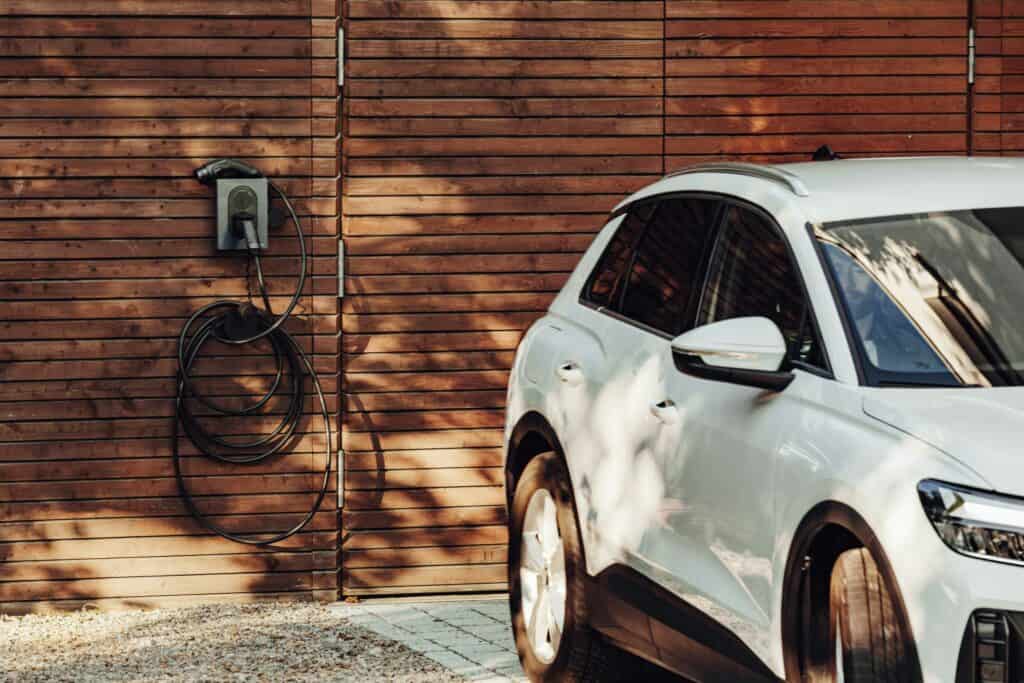
The charger unit is mounted to an external wall or garage wall, connected to the dedicated circuit, and powered up.
Testing and certification:
The installation is tested to current BS 7671 (the IET Wiring Regulations) and you are issued with an Electrical Installation Certificate (EIC) confirming the work is compliant. This is a legal requirement and an important document to keep.
Does Your Consumer Unit Need Upgrading First?
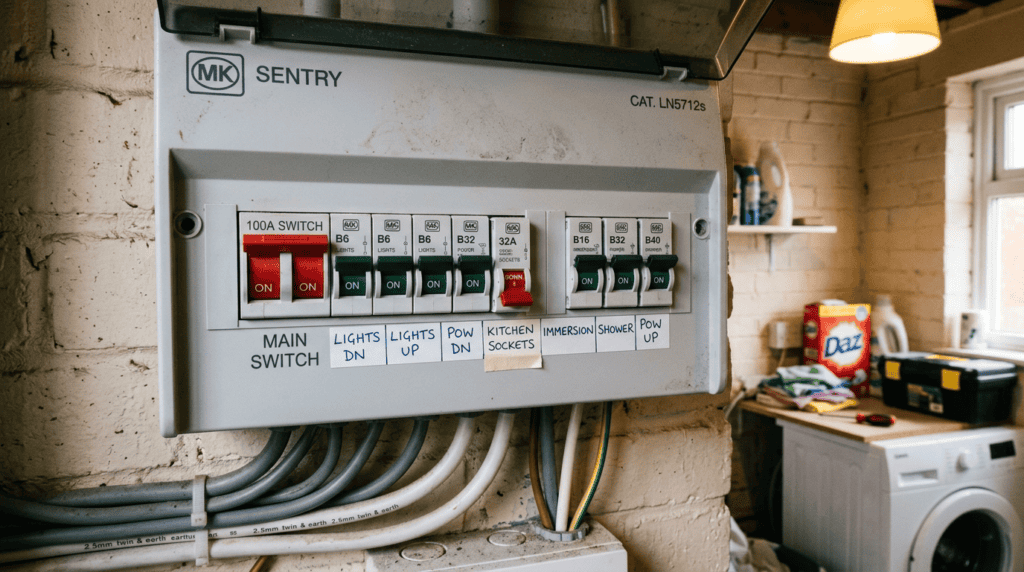
Not always — but it depends on your existing setup. Most modern consumer units (those fitted in the last 10–15 years) will have sufficient capacity to accommodate a dedicated EV charger circuit. Older consumer units — particularly those without RCD protection — may need upgrading before a charger can be safely installed.
An electrician can assess this quickly. If you are unsure whether your fuse box is suitable, our guide on whether you need to upgrade your consumer unit covers the main indicators to look out for.
How to Choose an Electrician for EV Charger Installation
When looking for an electrician to install your home EV charger, check for the following:
- OZEV registration — essential if you want to claim the EV Chargepoint Grant
- NICEIC approval — the leading voluntary regulatory body for the electrical industry. NICEIC-approved electricians are regularly assessed against national standards
- Part P competent person — able to self-certify notifiable electrical work without involving building control
- Clear, written quotes — the scope, specification of charger unit, and total cost should all be agreed in writing before work begins
At Electric-Cal Solutions, we are NICEIC approved and work with homeowners across Worksop, Retford, Mansfield, Sheffield, and the surrounding areas. We provide straightforward advice on the right charger for your property and handle the full installation from survey through to certification.
Get a Quote for EV Charger Installation in Worksop and Surrounding Areas
If you are ready to have a home EV charger installed — or you just want to understand your options before you commit — get in touch with Electric-Cal Solutions. We will assess your property, confirm your OZEV grant eligibility, and provide a clear, no-obligation quote.
Call us: 07922 110678 / 01909 261231
Or fill out our contact form for a fast callback →
We typically respond within 2 hours during business hours.